

Plaster Sand Gauteng: Washed, SANS 1090-Aligned & Ready to Deliver
What plaster sand is, how local standards apply, the mixes that work, on-site quality checks, common defects — and reliable washed plaster sand across Gauteng.
Cloete’s Sand & Stone • Since 1982 | Updated: 27 Oct 2025
What is plaster sand?
Plaster sand is a fine, clean aggregate specially processed for smooth, crack-resistant wall and ceiling finishes. It’s finer than building sand, coarser than concrete sand and washed to remove clay, silt and organics for reliable bonding and curing.
- Spreads easily and finishes smoothly.
- Reduces water demand and shrinkage cracking.
- Supports durable, even colour and surface hardness.
Local standards: SANS 1090 (what it is — and isn’t)
SANS 1090 sets minimum quality requirements for aggregates used in plaster. Meeting the standard is essential, but consistency from a trusted supplier is what keeps your finish flawless month after month. A simple water-demand check often tells you more than a certificate.
Quick on-site quality check (water-requirement test)
Mix 12.5 kg sand with cement and add water to working consistency:
- Good sand: ~2.5 L water → reliable for interior and exterior work.
- Average: ~3.0 L → monitor workability and shrinkage.
- Poor: ≥3.75 L → avoid; high fines/clay content likely.
At Cloete’s, our washed plaster sand is formulated to sit in the “Good” range for consistent results.
Recommended plaster mixes
Internal walls & ceilings
1 : 4 (cement : sand)
- Add water gradually; aim for a creamy, cohesive spread.
- Do not retemper once the mix starts to set.
External walls
1 : 6 (cement : sand)
- Lean mix improves weather durability.
- Protect from rapid drying; cure to develop strength.
Common plaster defects (and the sand link)
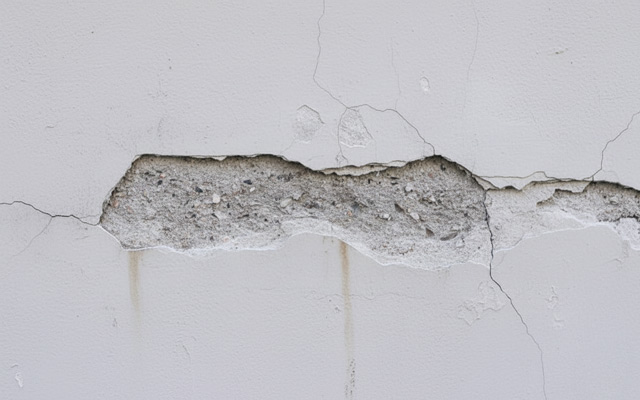
| Defect | Description | Likely Cause | Prevention / Fix |
|---|---|---|---|
| Cracking (incl. crazing) | Fine spider-web cracks or wider shrinkage cracks. | High fines/clay → higher water demand, greater shrinkage. | Use washed, well-graded sand; control water; cure properly. |
| Soft surface | Weak, easily scratched finish. | Excess dust/impurities; over-wet mixes; poor curing. | Select clean sand; avoid retempering; ensure curing. |
| Debonding | Plaster lifts from substrate or previous layer. | Impurities or high water demand reduce adhesion. | Clean, washed sand; correct mix; prepare substrate. |
How much plaster sand do I need?
As a quick rule of thumb, 1 m³ covers ~60–70 m² at 10 mm thickness. Allow for waste, substrate texture and weather. Prefer a take-off? Request an estimate.
Price vs value: plaster sand in Gauteng
Cheapest per m³ can be costly later. Unwashed or inconsistent sand often increases water demand and shrinkage — leading to cracks, callbacks and rework.
- Compare washing quality and grading consistency, not only R/m³.
- Factor distance to site, load size and access into total delivered cost.
Delivery coverage (Gauteng)
We deliver across Johannesburg, Pretoria/Tshwane, Ekurhuleni (East Rand), Midrand, Centurion and the West Rand. Same-day slots are often available. We’ll match vehicle to access and quantity — from small loads to large tippers.