
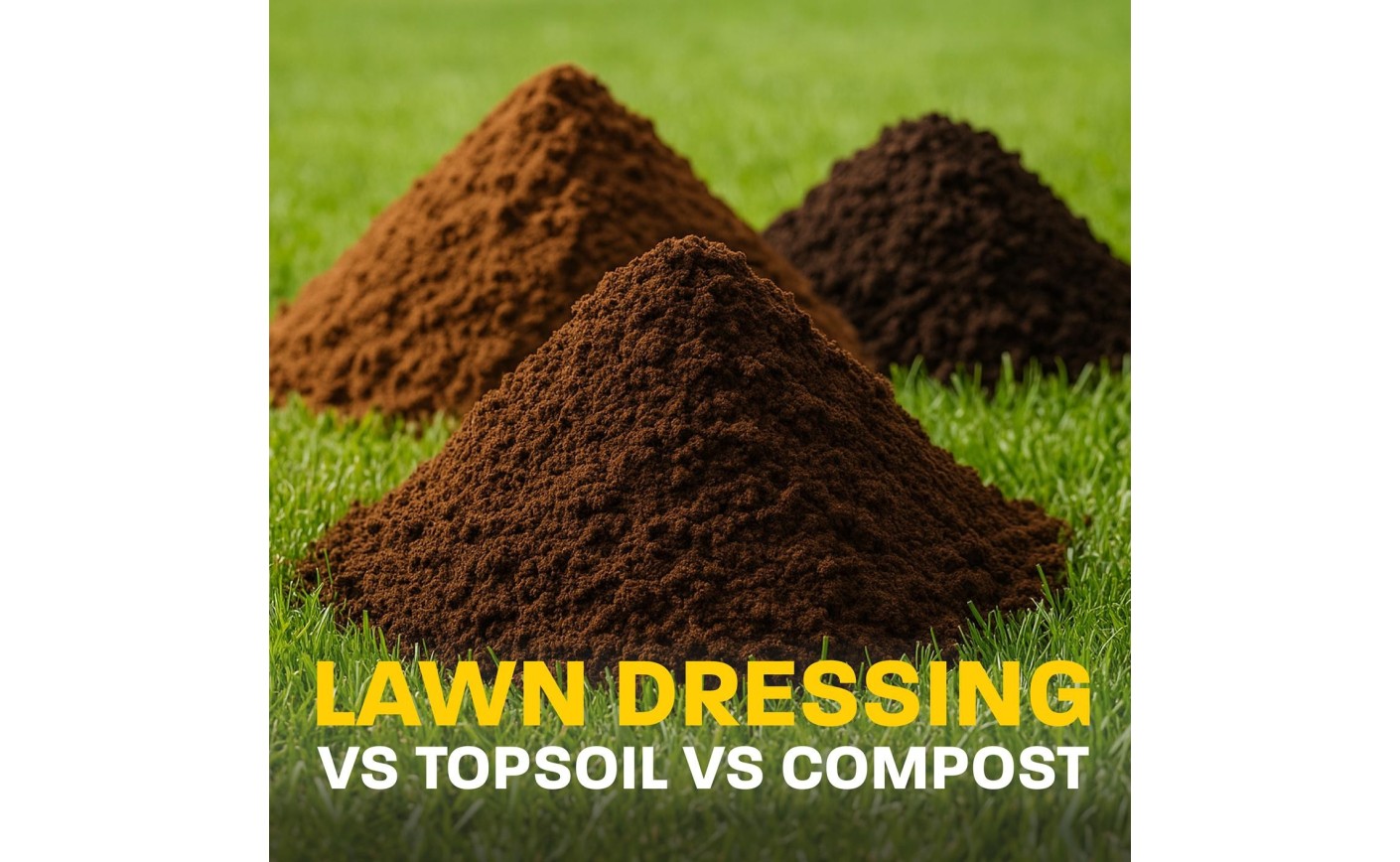
Lawn Dressing vs Topsoil vs Compost
What’s Best for Your Garden?
At Cloete Sand & Stone, we’ve supplied South Africa’s homeowners, landscapers and contractors with quality aggregates and soil products for over 40 years. One of the most common questions we get is: What’s the difference between lawn dressing, topsoil and compost – and which should I use?
If you’ve ever stood in the garden aisle wondering which product is right for your lawn or flower beds, this guide makes it simple.
What is Lawn Dressing?
Your Lawn’s Secret Weapon
Lawn dressing is a premium, carefully screened blend — typically a 50:50 mix of quality topsoil and mature, weed-free compost. The mix combines the stability of topsoil with the slow-release nutrition of compost.
- Topsoil adds structure and weight so it settles evenly into your sward.
- Compost delivers nutrients and beneficial microbes that improve soil health for months.
Pure compost can be too fluffy for lawns (risking smothering if applied thickly). The lawn-dressing blend solves this with better spreadability and even settling.
Benefits of lawn dressing
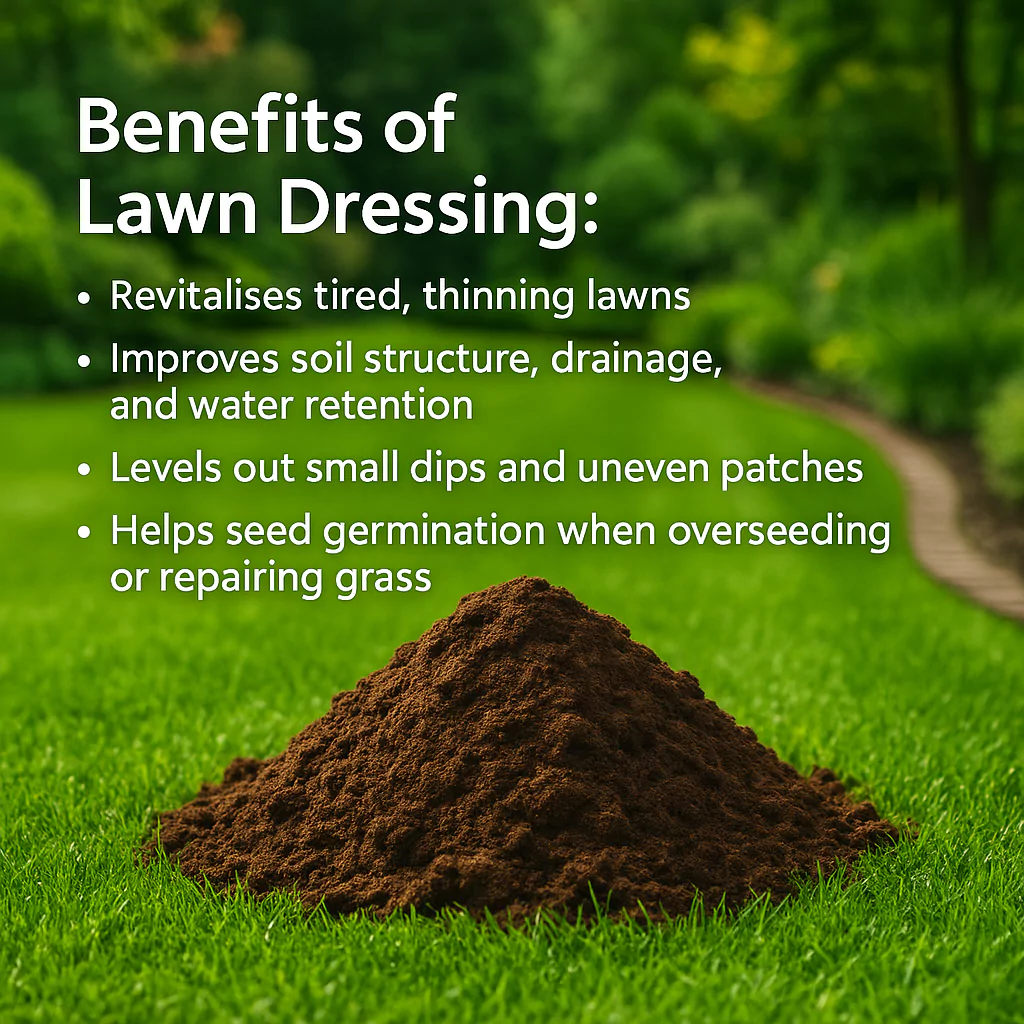
- Revitalises tired, thinning lawns
- Improves soil structure, drainage and water retention
- Levels out small dips and uneven patches
- Encourages greener, denser growth
Topsoil vs Lawn Dressing
Topsoil is the natural upper layer of earth — sand, silt, clay and organic matter. It’s your blank canvas for:
- Large-scale levelling
- Filling holes
- Creating new garden beds
- Establishing new lawns from scratch
Topsoil is cost-effective for bulk projects, but it’s not refined enough to rejuvenate an existing lawn on its own.
Lawn dressing is more specialised — designed to be applied thinly (3–10 mm) over established grass without damaging it. Use it to improve lawn health, not to fill large bare patches (that’s topsoil’s job).
Compost vs Lawn Dressing
Single Ingredient vs Ready-to-Use Blend
Compost is 100% organic matter — nutrient-rich “black gold” ideal for enriching vegetable gardens and flower beds.
Lawn dressing contains compost plus topsoil, making it the perfect ready-to-use lawn treatment.
- Compost alone is excellent for beds but difficult to spread evenly on lawns.
- Lawn dressing spreads lightly and won’t suffocate the grass when applied correctly.
Lawn Dressing vs Fertiliser
Long-Term Health vs Quick Fix
- Fertiliser: Fast NPK boost to green-up your lawn quickly.
- Lawn dressing: Improves soil structure and feeds steadily over time.
Pro tip: Apply fertiliser first for instant results, then lawn dressing to sustain growth and build long-term soil health.
When Not to Use Lawn Dressing
Potting Soil vs Lawn Dressing — they’re not interchangeable.
- Potting soil is lighter and drains better for container plants.
- Lawn dressing is denser, holds more moisture and can suffocate potted plants.
When and How to Apply Lawn Dressing
Best time in South Africa: Early spring (Aug–Sep) or late autumn. Avoid extreme heat or frost.
Application steps
- Prepare — Mow slightly lower, rake out thatch and, if needed, aerate the soil.
- Optional boost — Apply fertiliser first.
- Spread evenly — 3–10 mm layer; grass tips should still be visible.
- Water gently — Helps the mix settle around the crowns and roots.
How much should I use?
Rule of thumb (per 100 m²):
- 3 mm dressing ≈ 0.30 m³
- 5 mm dressing ≈ 0.50 m³
- 10 mm dressing ≈ 1.00 m³
Allow for surface unevenness and waste, especially on older lawns.
Where to Buy Lawn Dressing
At Cloete Sand & Stone, we supply:
- Bulk deliveries for large gardens and landscaping projects across Gauteng
- Quality-graded products screened for consistency
- Lawn dressing delivered direct to your home or site
Whether you’re levelling a new lawn or reviving tired grass, our products deliver lasting results.
Summary Table – Lawn Dressing vs Topsoil vs Compost
| Product | Main Use | Composition | Best For |
|---|---|---|---|
| Lawn Dressing | Level & nourish existing lawns | ~50% topsoil + ~50% compost | Smoothing bumps, feeding grass |
| Topsoil | Foundation soil for large areas | Sand, silt, clay, organic matter | New lawns, filling deeper holes |
| Compost | Enrich garden soil | Decomposed plant matter | Vegetable beds, boosting fertility |